Afghanistan Silk Road Heritage Tour – 12 Days
of History, Culture and Discovery
Afghanistan
is one of the most historically significant destinations along the ancient Silk
Road, where centuries of cultural exchange have shaped remarkable architecture,
diverse communities and extraordinary landscapes. Our 12-day Afghanistan Silk
Road Heritage Tour offers an opportunity to discover the country's rich
historical and cultural heritage, from the traditional neighbourhoods of Kabul
and the medieval monuments of Ghazni to the Buddhist archaeological sites of
Bamyan, the spectacular lakes of Band-e Amir, the Timurid architecture of Herat
and the ancient civilisation of Balkh.
Organised
by Hunza Explorers, this carefully designed Afghanistan cultural tour combines
historical exploration, natural landscapes, traditional bazaars, architectural
heritage and authentic encounters with local communities. Travelling through
central, western and northern Afghanistan, we discover a country whose history
has been influenced by ancient Persian civilisations, Buddhist kingdoms,
Islamic dynasties and the merchants and travellers who once followed the Silk
Road.
The journey
combines overland travel with domestic flights, allowing us to explore
Afghanistan's major cultural destinations within a comprehensive 12-day
itinerary.
Discover Afghanistan Along the Ancient Silk
Road
Afghanistan
occupied a strategic position at the crossroads of Central Asia, South Asia and
the Iranian plateau. For centuries, merchants, scholars, pilgrims and explorers
travelled through its mountain passes, fertile valleys and historic cities,
exchanging goods, knowledge, religious beliefs and artistic traditions.
The
country's archaeological remains and architectural monuments reflect these
diverse influences. Ancient Buddhist caves, medieval Islamic minarets,
fortified settlements, royal gardens and historic religious complexes reveal
different chapters of Afghanistan's history.
Our
Afghanistan Silk Road tour connects several of these important destinations,
providing a deeper understanding of the civilisations that developed across the
region. Beyond its historical monuments, the journey introduces us to
traditional Afghan craftsmanship, regional cuisine, local markets and the
cultural diversity that continues to define the country.
Explore Kabul – Afghanistan's Historic Capital
Surrounded
by rugged mountains, Kabul is Afghanistan's capital and one of its most
historically important cities. Its strategic location made it a significant
centre of trade and political power, connecting the Indian subcontinent with
Central Asia and Persia.
During our
time in Kabul, we explore Babur Gardens, the historic terraced gardens
containing the tomb of Babur, founder of the Mughal Empire. The gardens reflect
the architectural and landscaping traditions of Persian and Central Asian royal
gardens.
We also
visit Dar-ul-Aman Palace, an impressive neoclassical building
constructed during the reign of King Amanullah Khan, and the National Museum
of Afghanistan, which preserves archaeological collections representing the
country's ancient and medieval civilisations.
Other
important landmarks include Sakhi Shrine, Timur Shah Mausoleum
and Wazir Akbar Khan Hill, which offers panoramic views of the capital.
One of the
most rewarding experiences is exploring Old Kabul, including the
historic neighbourhoods of Murad Khani, Chindawol, Shor Bazaar
and Asheqan wa Arefan. Traditional houses, carved wooden doors, narrow
alleyways and small artisan workshops offer an insight into the city's
architectural heritage and everyday life.
The
traditional Ka Foroshi Bird Market, Mandawi Bazaar and Chicken
Street provide opportunities to discover local trading traditions, handmade
carpets, textiles, handicrafts and Afghan culture.
Ghazni – The Historic Capital of the Ghaznavid
Empire
Located
south of Kabul, Ghazni was once the capital of the powerful Ghaznavid Empire,
which flourished during the 10th and 11th centuries. Under Sultan Mahmud of
Ghazni, the city became an influential centre of Islamic scholarship, Persian
literature and architectural development.
Our
exploration includes the famous Ghazni Minarets, two remarkable medieval
brick towers distinguished by their intricate geometric patterns, decorative
inscriptions and architectural craftsmanship.
We also
visit the Mausoleum of Sultan Mahmud of Ghazni and the historic Ghazni
Citadel, which reflects the city's strategic importance throughout
different periods of Afghan history.
Exploring
Ghazni's traditional bazaar allows us to experience the everyday life of a city
that once stood among the most influential political and cultural centres of
the medieval Islamic world.
Bamyan Valley – UNESCO World Heritage and
Buddhist Civilisation
Situated in
Afghanistan's central highlands, Bamyan Valley is one of the country's most
remarkable archaeological and cultural destinations. Surrounded by the Hindu
Kush mountains, the valley was an important Buddhist centre and a significant
stopping point along the ancient Silk Road.
The Cultural
Landscape and Archaeological Remains of the Bamyan Valley were inscribed on
the UNESCO World Heritage List in 2003, recognising the valley's outstanding
historical and cultural significance.
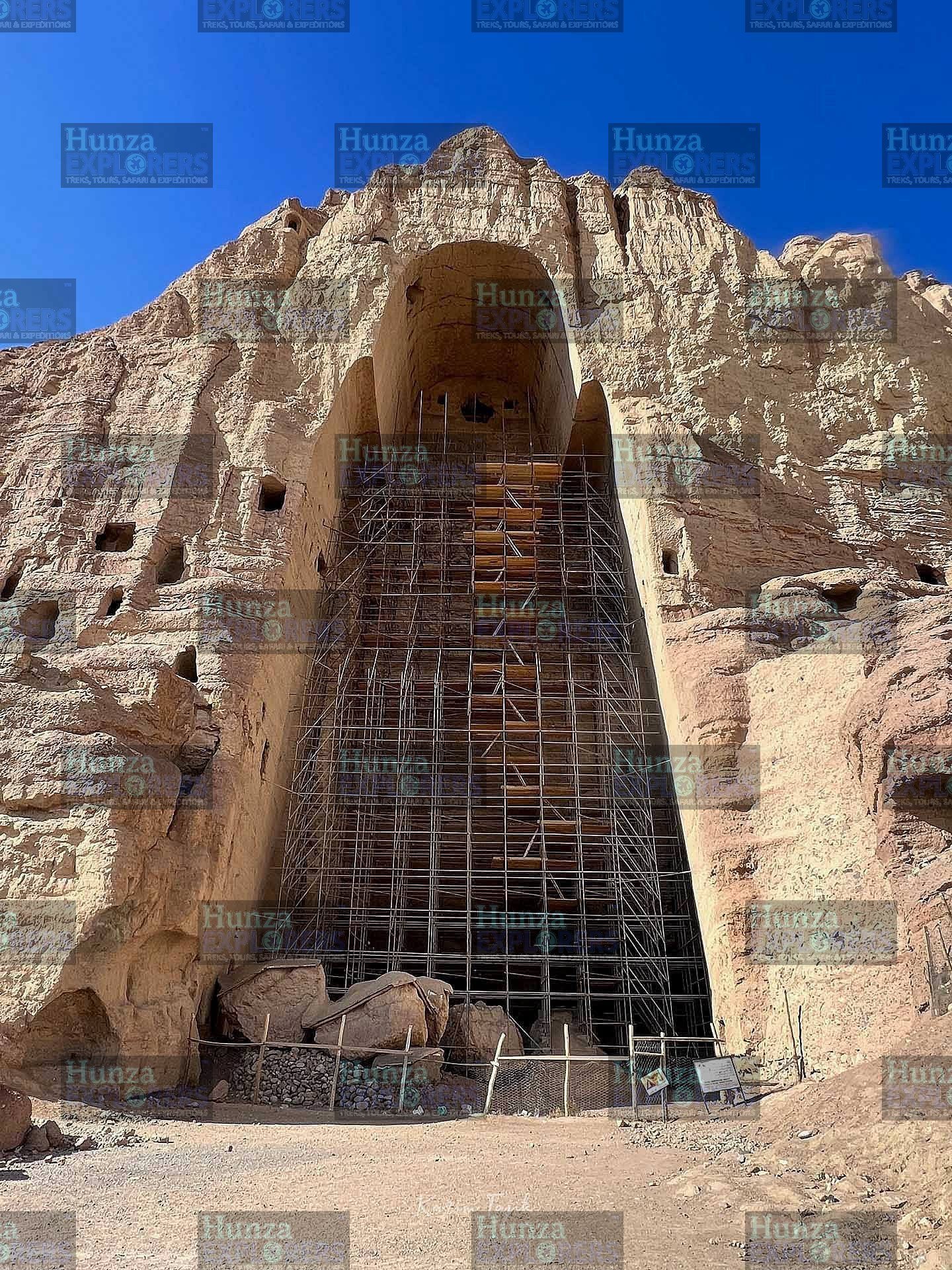
We visit
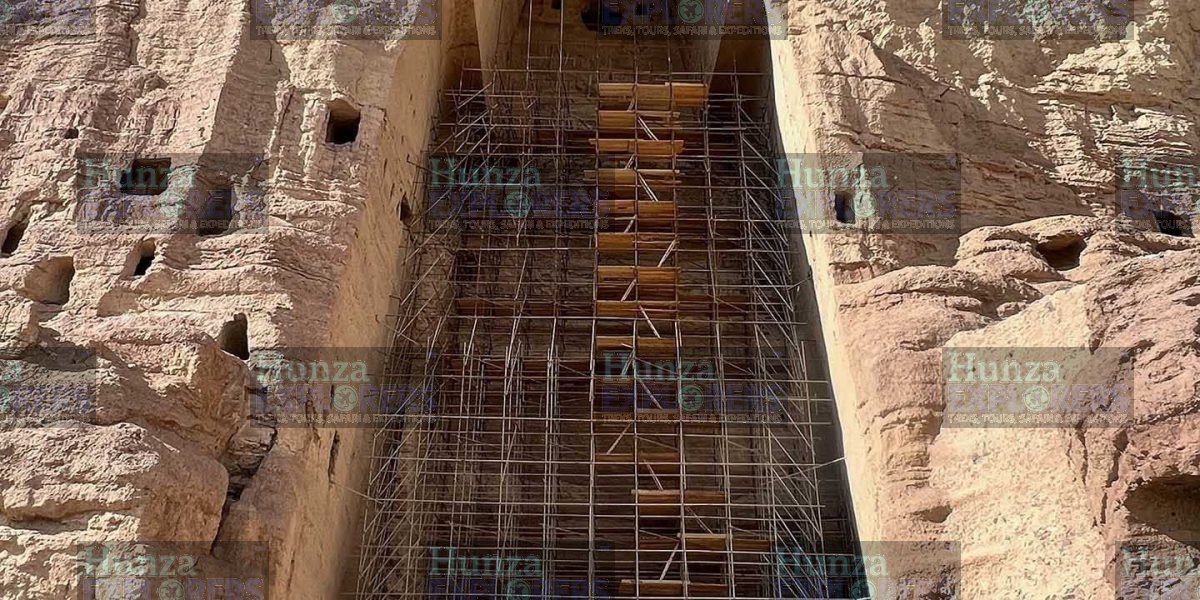
the famous Bamyan Buddha Niches, where two monumental standing Buddha
statues once stood. Although the statues were destroyed in 2001, the surviving
niches, Buddhist caves and archaeological remains continue to demonstrate the
region's historical importance.
The
surrounding Buddhist Caves once accommodated monks and pilgrims, with
surviving architectural features and fragments of ancient paintings reflecting
artistic exchanges between different Asian civilisations.
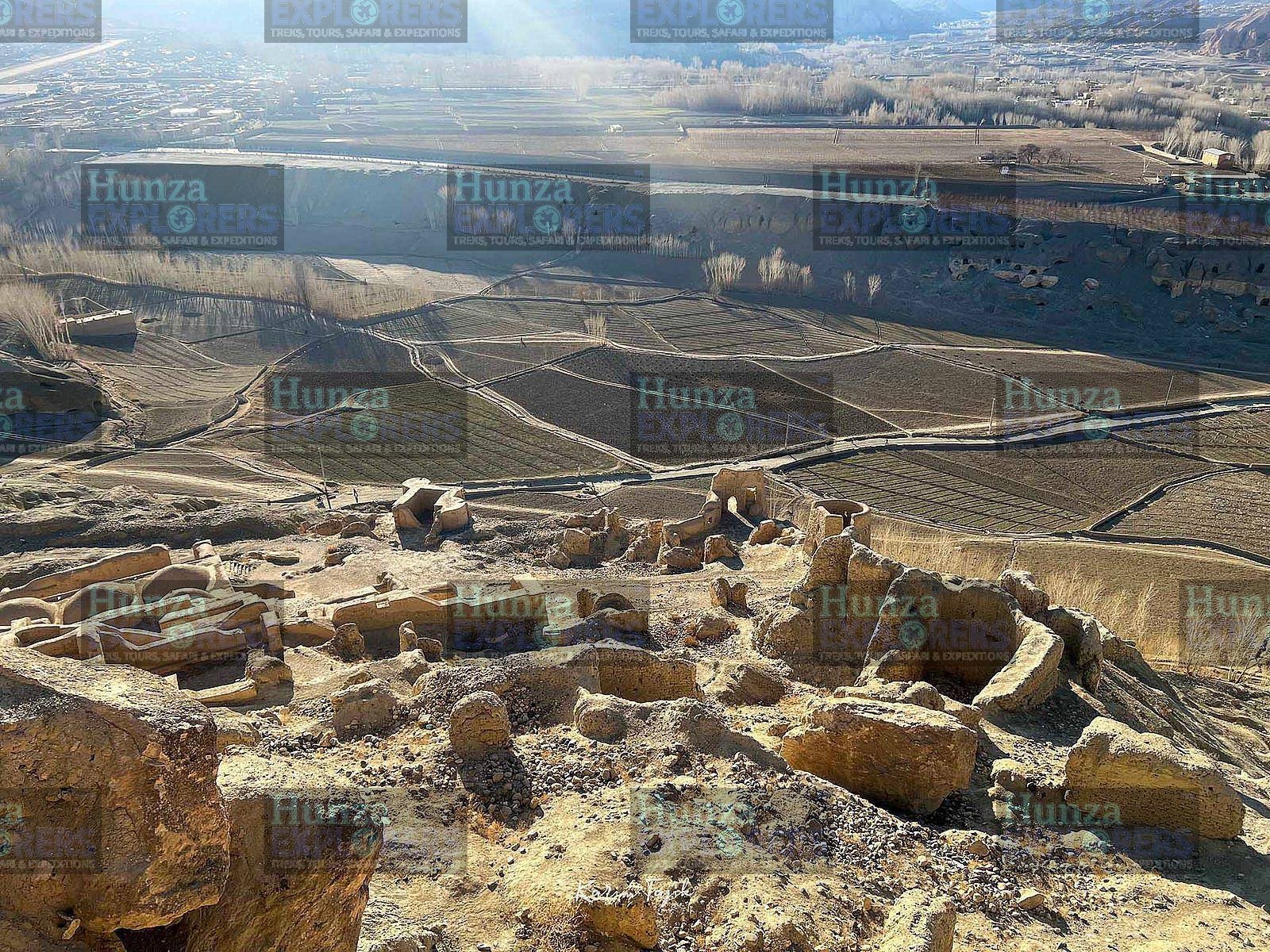
We also
explore Shahr-e Gholghola, commonly known as the City of Screams, and Shahr-e
Zohak, the Red City. These historic fortified settlements reveal the
strategic importance of Bamyan during the medieval period.
Beyond its
archaeological heritage, Bamyan is an important cultural centre of
Afghanistan's Hazara community, offering opportunities to experience
traditional settlements, local hospitality and the distinctive landscapes of
the central highlands.
Band-e Amir National Park – Afghanistan's
Natural Wonder
A highlight
of our Afghanistan tour is the excursion to Band-e Amir National Park,
established in 2009 as the country's first national park.
Located
within the central highlands, Band-e Amir is renowned for its six naturally
formed lakes separated by travertine dams. The contrasting colours of the
water, surrounding limestone cliffs and rugged mountain landscapes create one
of Afghanistan's most distinctive natural attractions.
We explore Band-e
Haibat and other accessible viewpoints within the national park,
appreciating the geological formations and dramatic scenery.
During
winter, snow-covered mountains and potentially frozen sections of the lakes
create a different but equally remarkable landscape.
On our
return journey, we visit the dramatic canyon landscapes commonly referred to as
the Grand Canyon of Bamyan, subject to confirmed access and road
conditions. Its deep ravines, eroded cliffs and colourful rock formations
provide excellent opportunities for landscape photography.
Herat – The Cultural and Architectural Jewel
of Western Afghanistan
Herat is
one of Afghanistan's most historically significant cities and a former centre
of Persian culture, literature, architecture and scholarship. During the 15th
century, the city flourished under the Timurid dynasty, attracting artists,
poets, architects and intellectuals.
Our
exploration of Herat includes the magnificent Friday Mosque of Herat,
also known as Masjid-e Jami. Its elaborate glazed tiles, decorative
calligraphy, monumental entrances and spacious courtyards represent centuries
of Islamic architectural development.
We visit Herat
Citadel, a historic fortified complex associated with successive rulers and
dynasties, and the surviving Musalla Minarets, which once formed part of
an extensive Timurid architectural complex.
The Mausoleum
of Gawhar Shad commemorates one of the most influential female patrons of
Timurid architecture and culture, while Gazargah Shrine preserves the
spiritual and architectural legacy of the celebrated Sufi scholar Khwaja
Abdullah Ansari.
Herat is
also renowned for its traditional craftsmanship, including glassmaking, carpet
weaving and decorative arts. Exploring local workshops and historic bazaars
offers a deeper appreciation of these living cultural traditions.
Mazar-i-Sharif and Balkh – The Ancient
Heritage of Northern Afghanistan
Our journey
continues to Mazar-i-Sharif, an important religious, cultural and commercial
centre in northern Afghanistan.
The city's
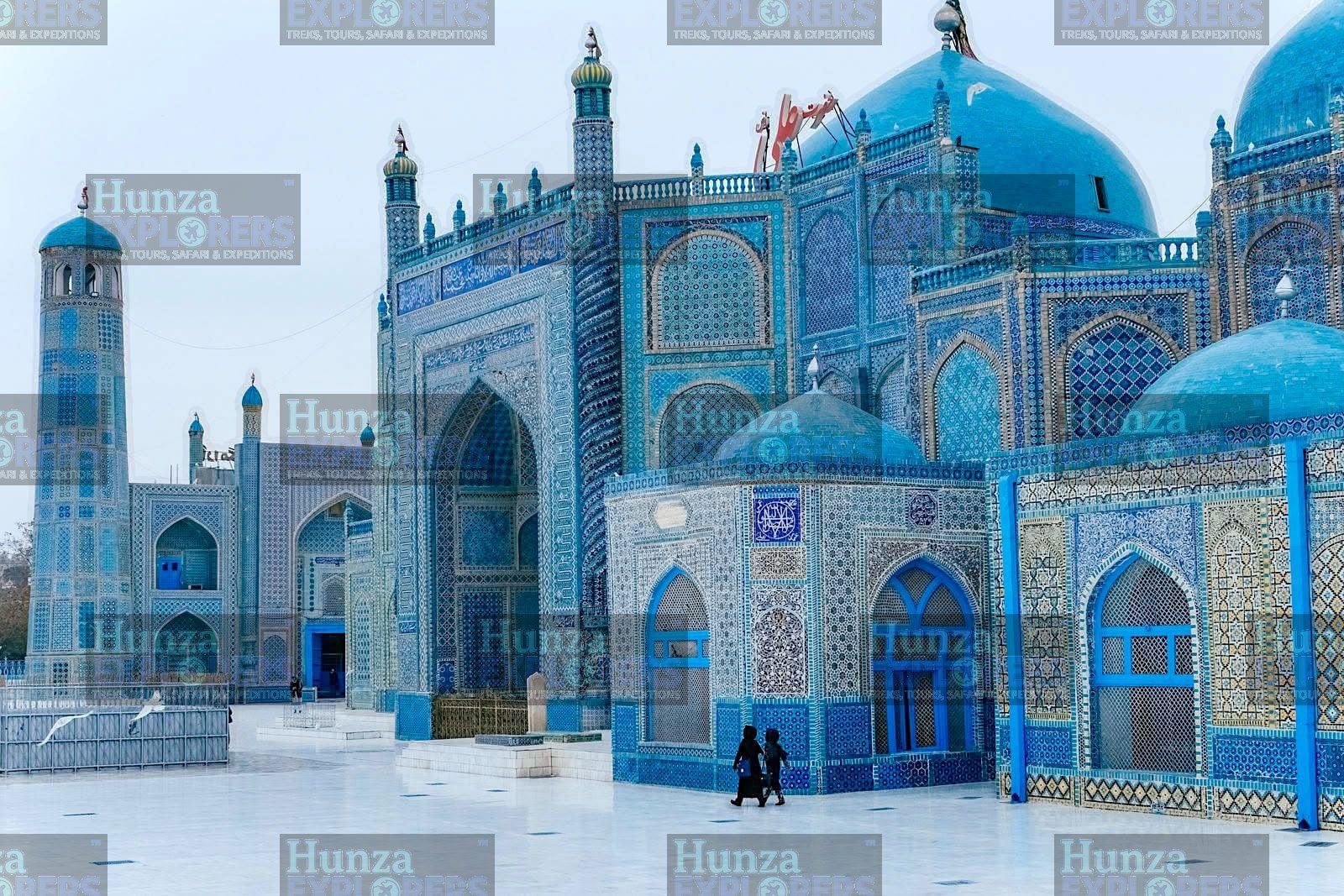
most famous landmark is the magnificent Blue Mosque of Mazar-i-Sharif,
also known as Rawza-e-Sharif. Distinguished by its intricate blue and turquoise
tilework, elegant domes and spacious courtyards, the shrine is one of
Afghanistan's most recognisable architectural landmarks.
From
Mazar-i-Sharif, we travel to Ancient Balkh, historically known as Bactra
and often referred to as the Mother of Cities. Once an important centre of
ancient Bactria, Balkh played a significant role in the development of
religious, commercial and intellectual traditions across Central Asia.
We explore
the ancient city walls, Noh Gumbad Mosque, Khoja Abu Nasr Parsa
Shrine and the Mausoleum of Rabia Balkhi. These monuments reflect
different periods of the region's architectural, spiritual and literary
heritage.
Authentic Afghan Culture, Local Life and
Photography
Our
Afghanistan cultural heritage tour extends beyond conventional sightseeing.
Traditional neighbourhoods, family-run shops, historic bazaars, local bakeries
and artisan workshops provide opportunities to observe the country's living
cultural traditions.
From the
narrow alleyways of Old Kabul to the rural settlements of Bamyan and the
historic markets of Herat and Balkh, the journey offers diverse opportunities
for cultural, architectural and landscape photography, subject to local
regulations and individual consent.
We also
discover regional Afghan cuisine, including traditional bread, rice dishes,
kebabs, dumplings, dried fruits and tea, experiencing the culinary traditions
that reflect Afghanistan's position at the crossroads of Asia.
Why Travel to Afghanistan with Hunza
Explorers?
Established
in 2003, Hunza Explorers specialises in cultural, historical and adventure
travel across the region. Our Afghanistan Silk Road Heritage Tour is designed
to combine meaningful cultural experiences with carefully coordinated
transportation, accommodation, local guiding and operational arrangements.
The
itinerary incorporates domestic flights between Kabul, Herat and Mazar-i-Sharif
to reduce lengthy overland journeys and provide more time for cultural
exploration.
Sightseeing
arrangements remain flexible to accommodate flight schedules, seasonal
conditions, local permissions and attraction accessibility. As Afghanistan
remains a destination with significant security risks and travel restrictions,
every departure is subject to a careful assessment of prevailing conditions,
official travel advice and operational feasibility.
This 12-day
Afghanistan heritage journey offers a comprehensive introduction to the
country's ancient civilisations, Islamic architecture, Buddhist archaeological
heritage, traditional communities and extraordinary natural landscapes.